The Slimy Truth: Understanding Pool Algae and How to Beat It
What is Algae, Really?
LEARN POOL CARE
Lydia | Honey Haven Home
2/19/20264 min read
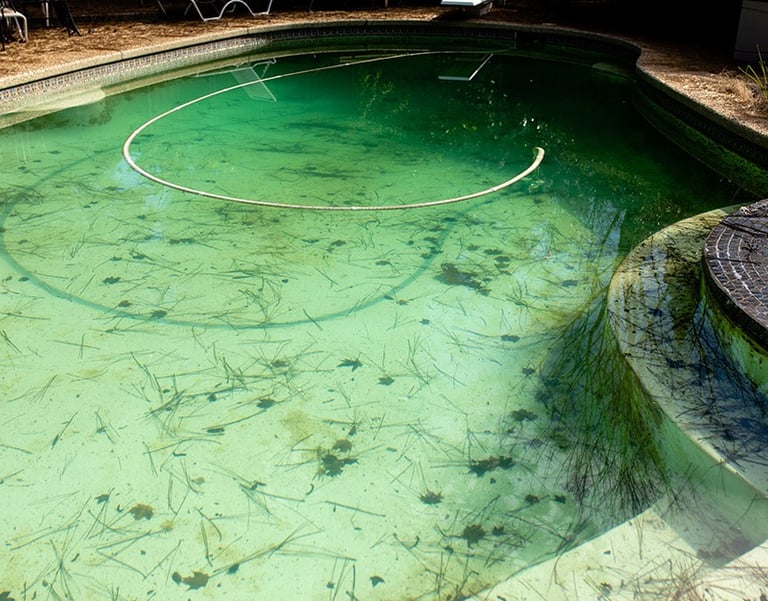
There's nothing that ruins a perfect day faster than spotting green fuzz on the walls or a mysterious yellow tint in the water.
Algae might look harmless, but it's a sneaky invader that can turn a sparkling pool into a swampy mess in no time.
This post breaks down everything about pool algae - what it is, why it forms, how to prevent it, and how to kick it out for good!
All About Algae
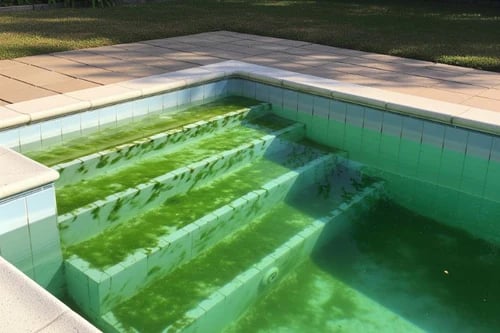
Green algae - the most common pool invader
What Is Algae, Really?
Algae are tiny, plant-like organisms that thrive in water and sunlight. They're not inherently evil - they exist naturally in the environment - but when they find a cozy, unbalanced pool, they multiply fast.
Algae feed on nutrients like phosphates and nitrates, and when chlorine levels drop or circulation slows, they throw a party.
The result? Slimy walls, cloudy water, and a whole lot of frustration!
The Three C's of Pool Care:
CIRCULATION. CLEANING. CHEMISTRY.
Why Algae Forms in Pools
Algae growth usually means something is off in the pool's balance or maintenance routine. Common culprits include:
Low chlorine levels: Not enough sanitizer to kill spores.
Poor circulation: Stagnant water gives algae a place to settle.
Warm temperatures: Heat speeds up algae growth.
Debris buildup: Leaves and dirt provide nutrients for algae.
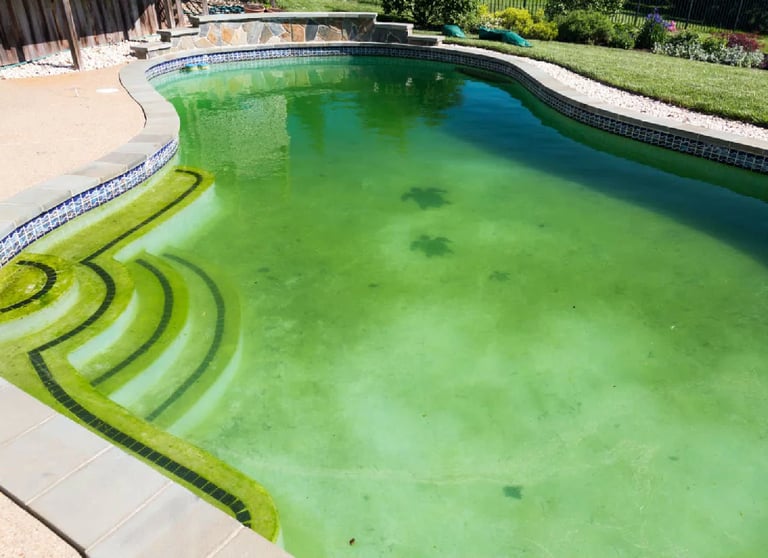
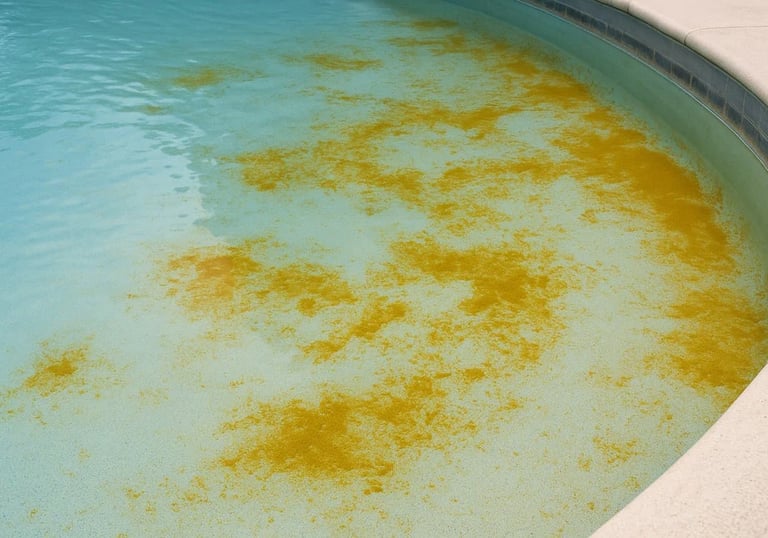
Mustard algae loves shady spots
The Three Main Types of Pool Algae
Green Algae. Yellow or Mustard Algae. Black or Blue-Green Algae.
Green Algae (Chlorophyta)
The most common type - and the easiest to treat. It turns water green and makes surfaces slippery.
Looks like: Cloudy green water or slimy green patches on walls and steps.
Thrives in: Warm, sunny conditions with low chlorine.
Treatment: Brush thoroughly, shock the pool, and run the filter continuously.
Yellow or Mustard Algae (Xanthophyceae)
This sneaky variety clings to shady areas and resists normal chlorine levels. It often looks like pollen or sand stuck to the walls.
Looks like: Yellowish dust that reappears after brushing.
Thrives in: Shady spots and low-circulation areas.
Treatment: Use a strong algaecide and shock the pool with a higher chlorine dose. Wash swimsuits and pool toys to prevent reinfection.
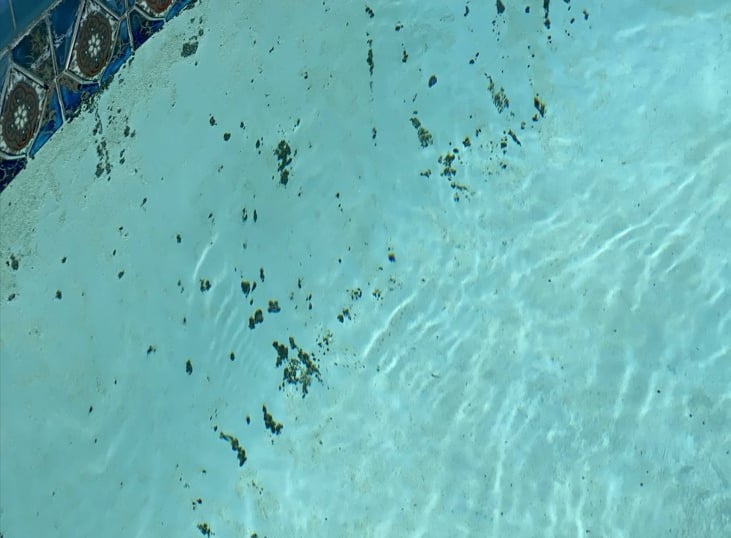
Technically a bacteria, not a true algae - but it's the toughest to remove. It forms dark, stubborn spots with deep roots that dig into plaster or grout.
Looks like: Black or dark green dots that don't brush off easily.
Thrives in: Cracks, corners, and rough surfaces.
Treatment: Scrub aggressively with a stainless-steel brush, shock heavily, and use a specialized algaecide.
Black or Blue-Green Algae (Cyanobacteria)
How to Treat Algae (Step-by-Step)
Brush the Pool
Loosen algae from walls, steps, and corners. Use a stiff brush for plaster pools and a nylon brush for vinyl.
Shock the Water
Add a high dose of chlorine (3-5 times the normal amount) to kill spores.
Add Algaecide
Choose one designed for the specific algae type. Follow label directions carefully.
Run the Filter Continuously
Keep the pump running for at least 24-48 hours to circulate chemicals and trap dead algae.
Vacuum and Backwash
Remove debris and clean the filter thoroughly afterward.
Retest and Rebalance
Adjust pH, chlorine, and alkalinity to ideal levels once the water clears.
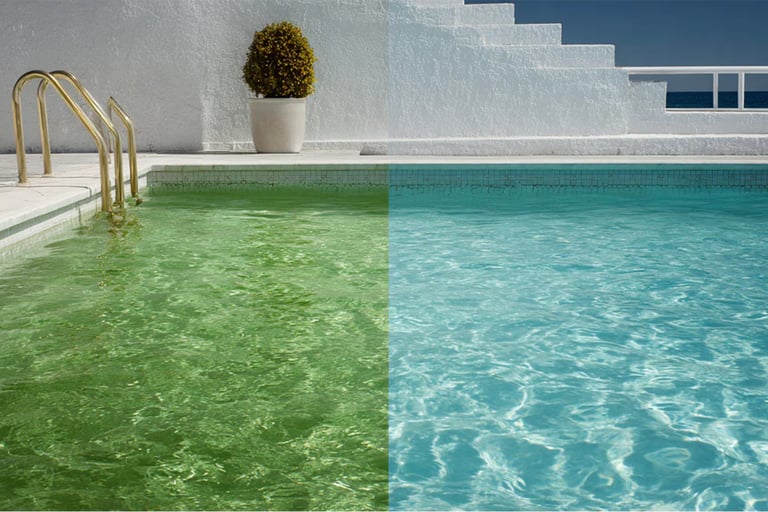
A consistent daily, weekly, and monthly pool routine is essential to keep water safe and crystal clear!
Want everything you need to care for your pool in one printable ebook you can keep poolside?
How to Prevent Algae From Coming Back
Test water often. At least 3x a week, after heavy use, or rain. Keep chlorine on the higher end of normal around 3 ppm. (Normal is 1-3 ppm).
Brush and vacuum. Brush at least twice a week. Vacuum at least every other day (some will argue this is too much, I promise it's not). Don't give algae a place to settle.
Run the pump daily. 12 hours for daily maintenance.
Shock weekly. During hot weather, after heavy use, or after heavy rain.
Keep debris out. Skim leaves and dirt before they sink. Skim daily.
Maintain chemical balance. After testing, balance chemicals.
The Bottom Line
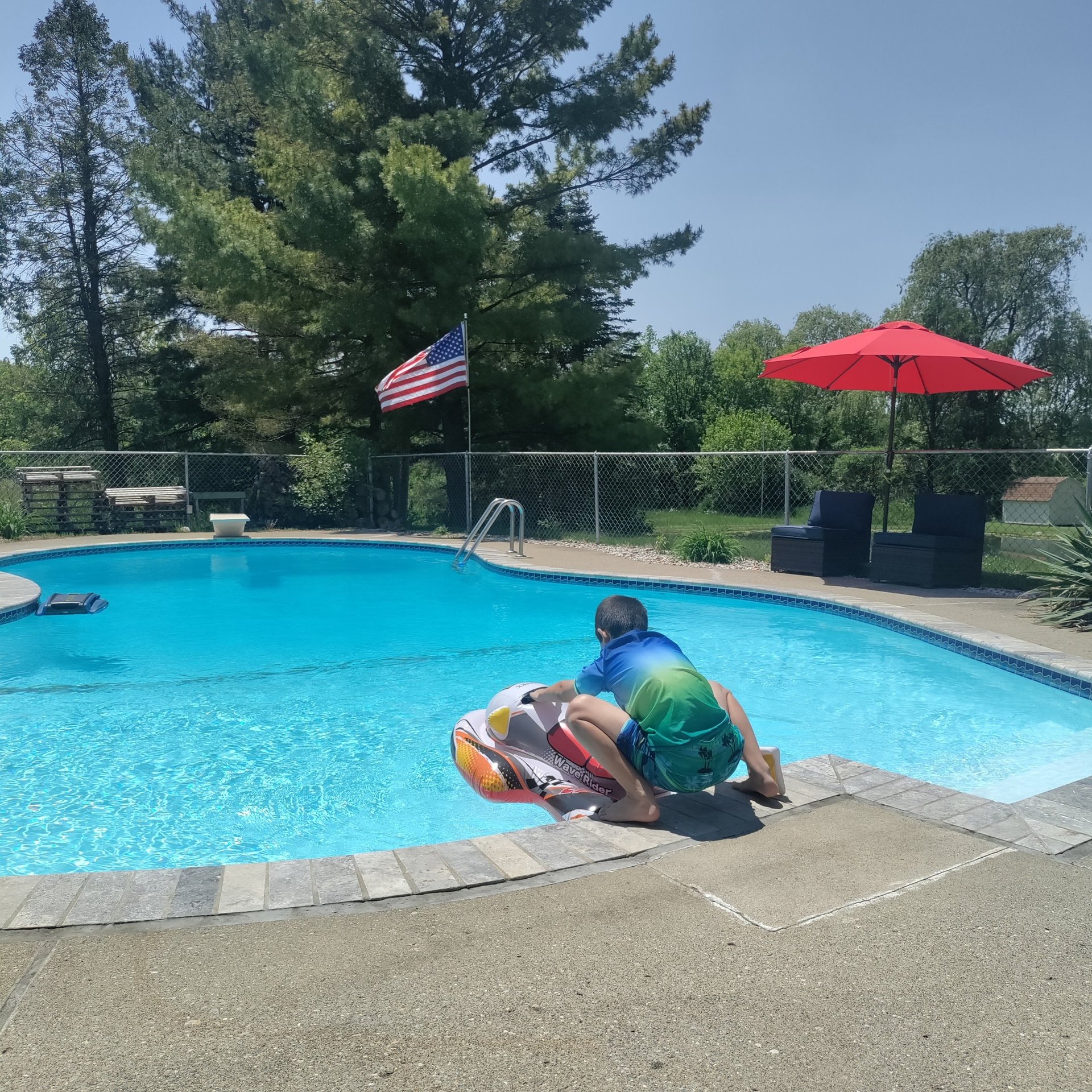
Algae might be persistent, but it's no match for a well-maintained pool. With regular testing, brushing, and balanced chemistry, the water stays clear, healthy, and ready for every splash.
A little prevention goes a long way - because the only green thing that belongs in a pool is a floaty shaped liked a watermelon.
Ready to turn your backyard into your very own oasis?
Navigation
Honey Haven Home
Simple pool care. Cozy backyard living. Confidence for beginners.
© 2026 Honey Haven Home. All rights reserved.