Liquid Chlorine: The Unsung Hero of Pool Perfection
Why Liquid Chlorine is the Best Choice
LEARN POOL CARE
Lydia | Honey Haven Home
2/20/20264 min read
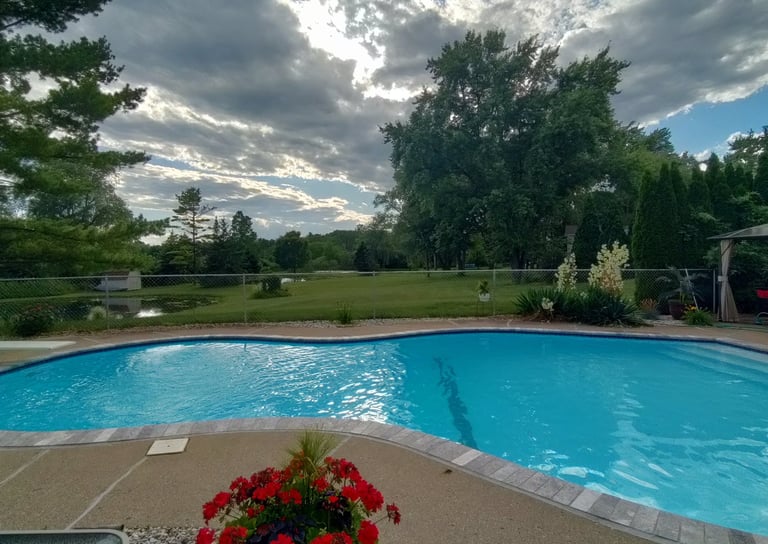
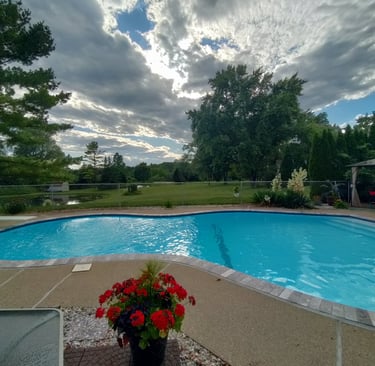
When it comes to keeping pool water sparkling, safe, and swim-ready, chlorine is the star of the show.
But not all chlorine is created equal. Tablets, granules, and liquid forms each have their own quirks—but one stands out as the clear winner for many pool owners: liquid chlorine.
This post dives into what makes liquid chlorine so effective, why it’s often the best choice sanitizer, and how to use it like a pro.
Liquid Chlorine
What is Liquid Chlorine?
Liquid chlorine is a powerful, fast-acting sanitizer made from sodium hypochlorite—the same active ingredient found in household bleach, but at a much higher concentration (usually around 10–12.5%). It’s a ready-to-use solution that goes straight to work killing bacteria, algae, and other unwanted guests in the pool.
Unlike tablets or granules, there’s no dissolving, no waiting, and no mystery. Just pour, circulate, and let it do its job.
Why Liquid Chlorine is the Best Choice
Instant results
Liquid chlorine doesn't need time to dissolve- it starts sanitizing the moment it hits the water. That means faster recovery from cloudy water, algae blooms, or heavy use.
Perfect for:
Shocking the pool after a big swim party
Quickly restoring balance after rain or debris
Regular maintenance when time is short
No Stabilizer Buildup
Many chlorine tablets and Granules contain cyanuric acid (CYA),a stabilizer that protects chlorine from sunlight. While a little stabilizer is good, too much can actually weaken chlorine's effectiveness.
Liquid Chlorine contains no stabilizer, giving full control over CYA levels. This means the sanitizer stays strong and active, especially in outdoor pools where sunlight can be relentless.
Note: Add CYA separately by putting it in a nylon sock and placing it in your skimmer, or in front of a return jet.
Consistent Sanitizing Power
Because it's already in liquid form, every dose of liquid chlorine delivers a predictable, even concentration. There's no risk of uneven dissolving or "hot spots" that can happen with tablets or granules.
No Residue or Scaling
Some solid chlorine products can leave behind calcium or other residues that build up over time, leading to cloudy water or scale on pool surfaces.
Liquid chlorine leaves no residue- it disperses evenly and cleanly, keeping water clear and the surfaces smooth.
Budget-Friendly
Liquid chlorine is most always the most cost-effective sanitizers per gallon of treated water. It's sold in refillable jugs or bulk containers, making it easy to stock up. (Don't stock up too much at one time, because liquid chlorine loses its potency. Keep two months supply on hand).
Storage Tip: Keep it in a cool, dark place, inside.
This consistency makes it ideal for automatic feeders or manual dosing - no surprises, just steady sanitizing power.
How to Use Liquid Chlorine
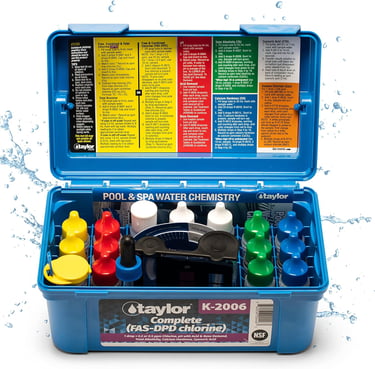
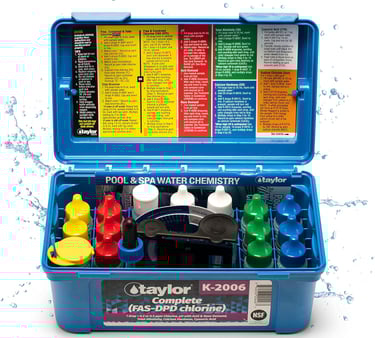
Always Test First! Do yourself a favor, and get a QUALITY titration drop water test kit. Drop tests offer superior accuracy and better detection ranges. The Taylor K-2006 kit is an excellent choice, and the one I use. You want to keep your chlorine levels slightly higher than the "recommended" 1-3 ppm. I keep the chlorine level between 4-5 ppm. This slightly higher level is efficient at preventing algae from blooming, and is safe.
Measure the Dose After testing, follow the instructions in your test kit for the correct amount. This will be based on how many ppm's you need to raise the chlorine level, and how many gallons of water your pool has. Use a chemical safe measuring cup to add the chlorine.
Pour It In Slowly pour liquid chlorine around the pool's perimeter while the pump is running. This helps circulate it evenly.
Let It Work Allow at least 1 hour before swimming. That way the chlorine has time to circulate. (Note: different types of chlorine, and other chemicals require different wait times).
Establish a testing routine A consistent testing routine is essential to keeping your water clear, clean, and safe! I recommend testing every other day. It is easier to prevent problems than to treat them! Depending on use, rain, or debris, you may need to add liquid chlorine daily or every other day.
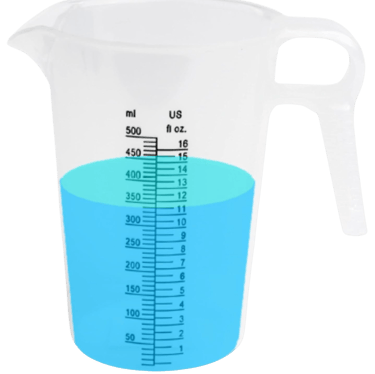
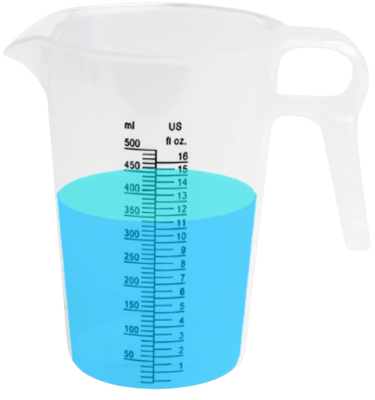
16oz (2 Cup) Measuring Pitcher, Plastic, Multipurpose - Great for Oil, Chemicals, Pool and Lawn
Beginner Tips:
NEVER mix chemicals together directly, as this can cause dangerous, toxic gases, OR explosions.
NEVER add water to chemicals, ALWAYS add chemicals to water. Separately.
ALWAYS balance other chemicals first (alkalinity, pH) before adding chlorine. This is crucial for chlorine to effectively sanitize the water.
The Bottom Line
Liquid chlorine is the go-to choice for pool owners who want speed, control, and clarity. It's powerful enough to tackle tough contaminants, gentle on pool surfaces, and flexible for any maintenance routine.
With no stabilizer buildup, no residue, and instant action, liquid chlorine keeps the water fresh, balanced, and brilliantly clear - all without the fuss.
So next time the pool needs a little TLC, skip the slow-dissolving tablets and grab the liquid gold of pool care.
Navigation
Honey Haven Home
Simple pool care. Cozy backyard living. Confidence for beginners.
© 2026 Honey Haven Home. All rights reserved.